Ballistic Level Protection
Selecting an armored vehicle is not always a straightforward decision. The appropriate level of protection should be determined by the anticipated threat, the operating environment, and the intended use of the vehicle.
The first step is therefore to conduct a realistic threat and risk assessment. Will the vehicle be used for routine executive transportation, travel in a higher-risk environment, diplomatic movements, or operations where specific ballistic threats may exist?
This assessment is important because higher levels of armor increase vehicle weight, cost, maintenance requirements, and mechanical stress. Specifying more protection than the threat requires can unnecessarily affect vehicle mobility and performance, while insufficient protection may expose occupants to unacceptable risk.
Ballistic threats are generally assessed according to factors including projectile type, construction, caliber, mass, velocity, and the conditions under which the projectile is fired.
It is also important to understand that there is no single worldwide classification system for armored vehicles. For example, EN 1063 is a European standard used to classify the ballistic resistance of security glazing, with classifications ranging from BR1 to BR7. Complete protected vehicles may instead be tested against dedicated vehicle standards, such as VPAM-BRV, which uses vehicle resistance classifications from VR1 upward.
The term “B6” is nevertheless widely used within the commercial armored-vehicle industry to describe a high level of rifle-resistant protection. Buyers should therefore look beyond the B6 designation itself and verify the applicable test standard, certified threat level, protected areas, and documentation supplied by the vehicle manufacturer or armoring company.
B6 Armoring for Executive Transportation
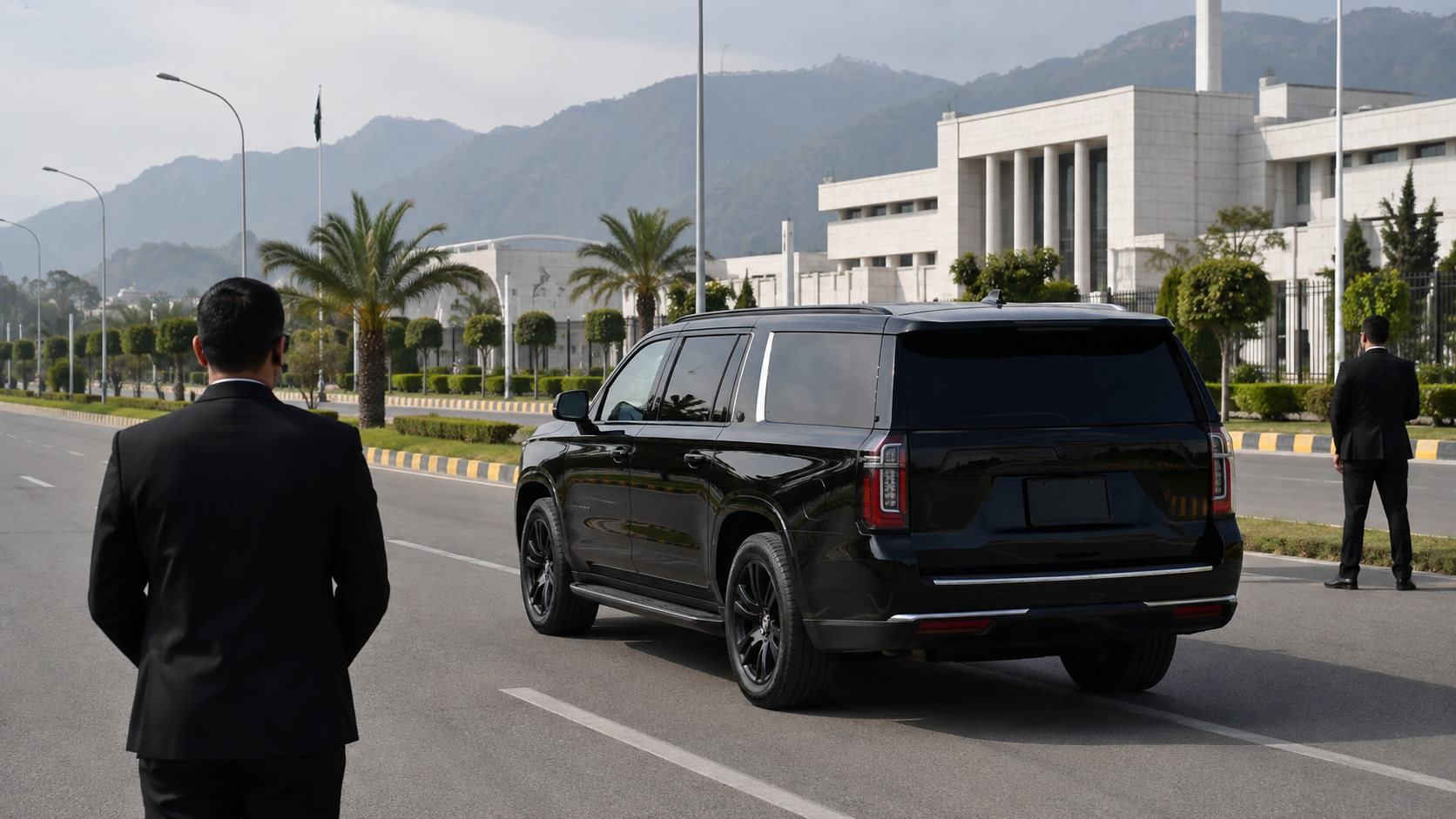
For senior corporate executives, diplomats, high net worth individuals, and government officials, transportation can represent a period of increased exposure.
Unlike offices, residences, or other controlled locations, vehicles operate in open and constantly changing environments. Routes, traffic conditions, stopping points, public access, and predictable travel patterns can all introduce additional security considerations.
For this reason, many organizations incorporate armored vehicles into their executive protection and secure mobility arrangements.
Commercially described B6-level protection is widely used in executive transportation because it can provide substantial ballistic resistance while preserving, where properly engineered, much of the appearance, comfort, and functionality expected from a premium civilian vehicle.
What Does B6 Protection Mean?
The term “bulletproof vehicle” is commonly used but technically misleading. No vehicle should be considered completely resistant to every weapon, projectile, explosive device, or attack scenario.
An armored vehicle is instead engineered and tested to provide resistance against defined threats under specified test conditions.
B6-level armoring generally refers to protection intended to address serious rifle-level ballistic threats. However, because terminology and certification systems differ between manufacturers and jurisdictions, the exact protection offered should always be confirmed through the vehicle's certification and technical documentation.
Ballistic Protection
The primary objective of vehicle armoring is to create a protected passenger compartment capable of resisting the specified ballistic threat.
Depending on the design and protection package, armored components may be incorporated into areas including:
- Passenger compartment body panels.
- Doors.
- Pillars and structural gaps.
- Roof.
- Floor.
- Firewall and rear bulkhead.
- Ballistic glazing surrounding the protected passenger compartment.
These components must function together as an integrated protective system.
Effective armoring is not simply a matter of installing ballistic steel or thick glass. Particular attention must be given to potential weak points, overlaps, door openings, pillars, joints, and transitions between transparent and opaque armor.
Reinforced Structural Integrity
Armor significantly increases the weight carried by a vehicle. This additional mass can affect acceleration, braking, suspension performance, handling, fuel consumption, tire wear, and the long-term durability of mechanical components.
A professionally engineered armored vehicle may therefore require upgrades or reinforcement to systems including:
- Suspension.
- Brakes.
- Door structures.
- Door hinges.
- Wheels and tires.
- Chassis and structural components.
- Engine cooling and other mechanical systems, where required.
Modern armoring solutions may also incorporate advanced composite materials alongside traditional ballistic materials to reduce weight while maintaining the required level of protection.
This balance between protection and mobility is particularly important in executive protection. An armored vehicle must not only protect its occupants during an attack; it should also retain sufficient mobility to move away from a developing threat.
Ballistic Glass
One of the most recognizable features of an armored vehicle is its transparent armor.
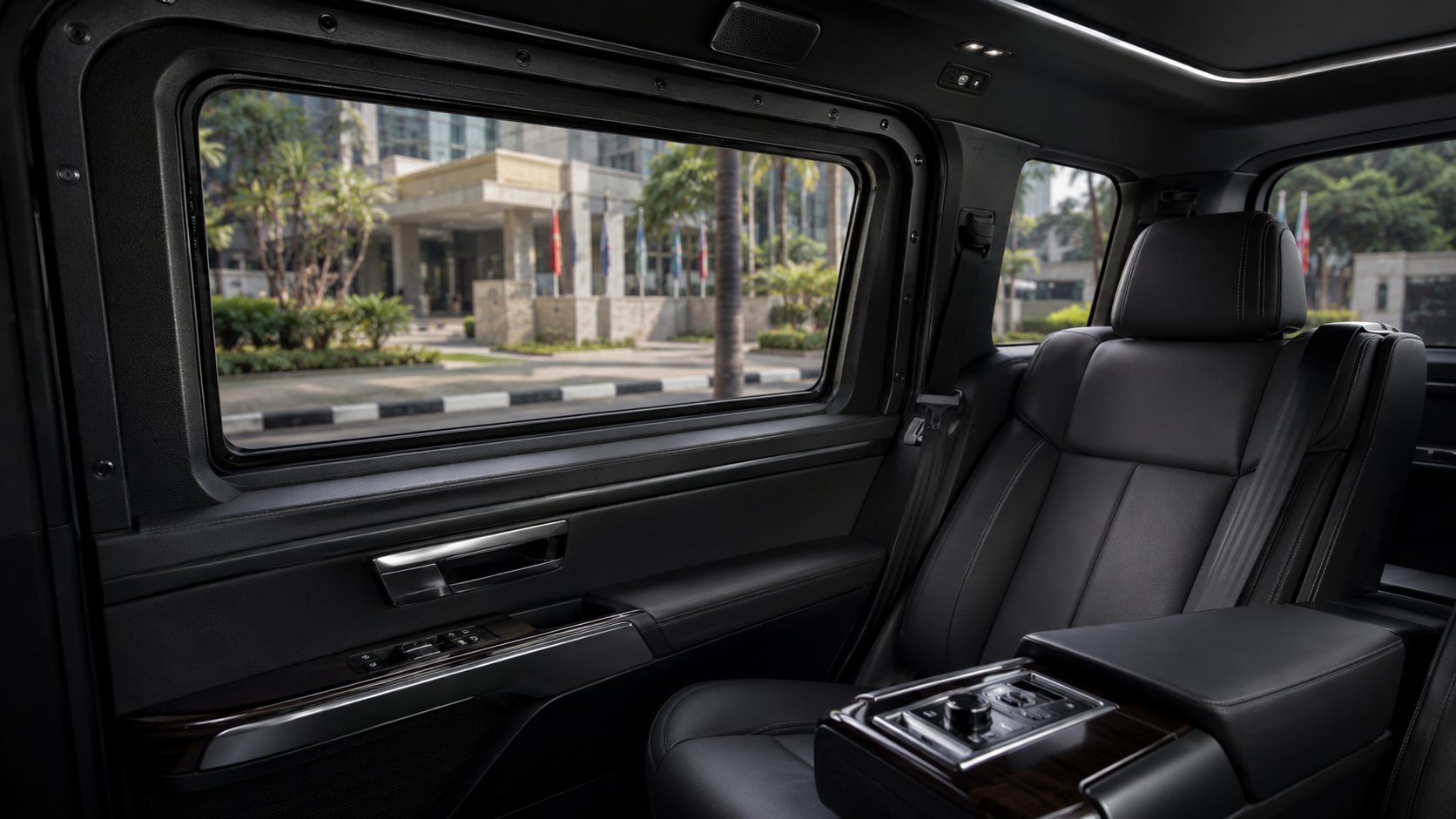
Ballistic glazing is constructed from multiple layers of glass and other high-strength transparent materials bonded together to resist specified ballistic threats while maintaining usable visibility for the driver and occupants.
Properly engineered ballistic glazing is designed to:
- Resist specified ballistic impacts.
- Reduce the risk of dangerous fragmentation entering the passenger compartment.
- Maintain sufficient optical clarity for safe vehicle operation.
- Integrate as discreetly as possible with the vehicle's original appearance.
Ballistic glazing is considerably thicker and heavier than conventional automotive glass. Its installation must therefore be properly integrated into reinforced door frames and surrounding vehicle structures.
Beyond Ballistic Resistance
Ballistic protection alone does not make an executive vehicle operationally secure.
Depending on the mission and risk environment, additional systems may include:
- Run-flat tire systems.
- Fuel-system protection.
- Fire suppression equipment.
- Emergency communication systems.
- GPS tracking and fleet monitoring.
- First-aid or trauma equipment.
- Reinforced electrical systems.
- Additional lighting or communication equipment.
Such features can improve the vehicle's ability to remain mobile and support occupants during an emergency.
However, equipment should always be selected according to operational requirements rather than added simply because it is available.
Why B6-Level Protection Is Commonly Used for Executive Protection
B6-level armoring has become a widely used option within executive transportation because it can offer a practical balance between ballistic protection, mobility, discretion, and everyday usability.
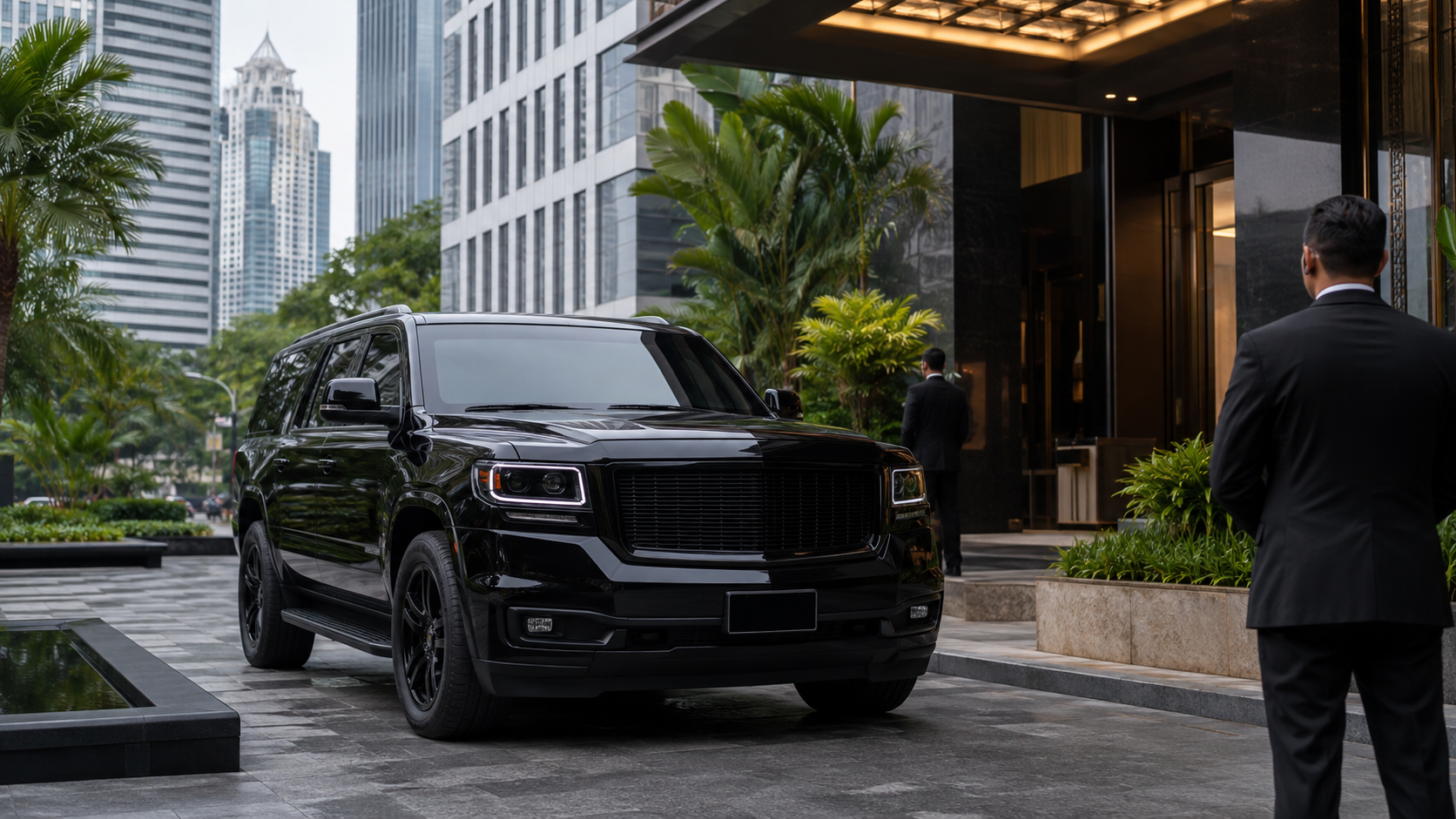
For corporate and diplomatic movements, discretion remains important. A vehicle that retains the external appearance of a conventional premium SUV or sedan may attract less unnecessary attention than an overtly tactical vehicle.
At the same time, protection should never be selected on appearance or reputation alone. Organizations should consider:
- The specific threat environment.
- Applicable ballistic certification.
- Vehicle weight and performance after armoring.
- Maintenance requirements.
- Quality and reputation of the armoring company.
- Driver training.
- Route and contingency planning.
- Availability of security support.
The Vehicle Is Only One Part of the Protection System
An armored vehicle should never be considered a substitute for professional security planning.
Even a highly protected vehicle can become vulnerable if it is used with poor route selection, predictable routines, inadequate communications, an untrained driver, or an absence of contingency planning.
Effective secure transportation combines the vehicle with:
- Threat and risk assessment.
- Journey management.
- Route planning.
- Alternative and emergency routes.
- Security-trained drivers.
- Executive protection personnel where required.
- Reliable communications.
- Local situational awareness.
- Emergency and medical contingency planning.
The objective is not simply to survive an attack, but where possible to identify, avoid, deter, or move away from threats before they develop into serious incidents.
Conclusion
Armored vehicles can provide an important layer of protection for executives, diplomats, government officials, and other individuals operating in elevated-risk environments.
B6-level armoring is widely associated with executive transportation because it can provide substantial protection against defined rifle-level ballistic threats while allowing appropriately selected vehicles to retain a discreet civilian appearance and practical mobility.
However, the designation “B6” should never be relied upon by itself. Organizations procuring armored vehicles should confirm the applicable ballistic standard, certification, protected areas, testing methodology, and exact protection specification provided by the manufacturer or armoring company.
Most importantly, an armored vehicle should form part of a comprehensive executive protection and secure mobility strategy.
Combined with professional planning, trained personnel, effective journey management, and proactive risk assessment, armored transportation can provide organizations with an important means of safeguarding their most valuable asset—their people.