
Iran initiated its nuclear program with the stated objective of developing nuclear technology for peaceful purposes, including electricity generation, medical research, and industrial applications. According to official Iranian statements, the program is intended solely for civilian use. However, since its inception, the program has been viewed with suspicion by Western countries due to concerns that Iran's uranium enrichment activities could potentially be expanded to produce weapons-grade material, thereby providing the capability to develop nuclear weapons.

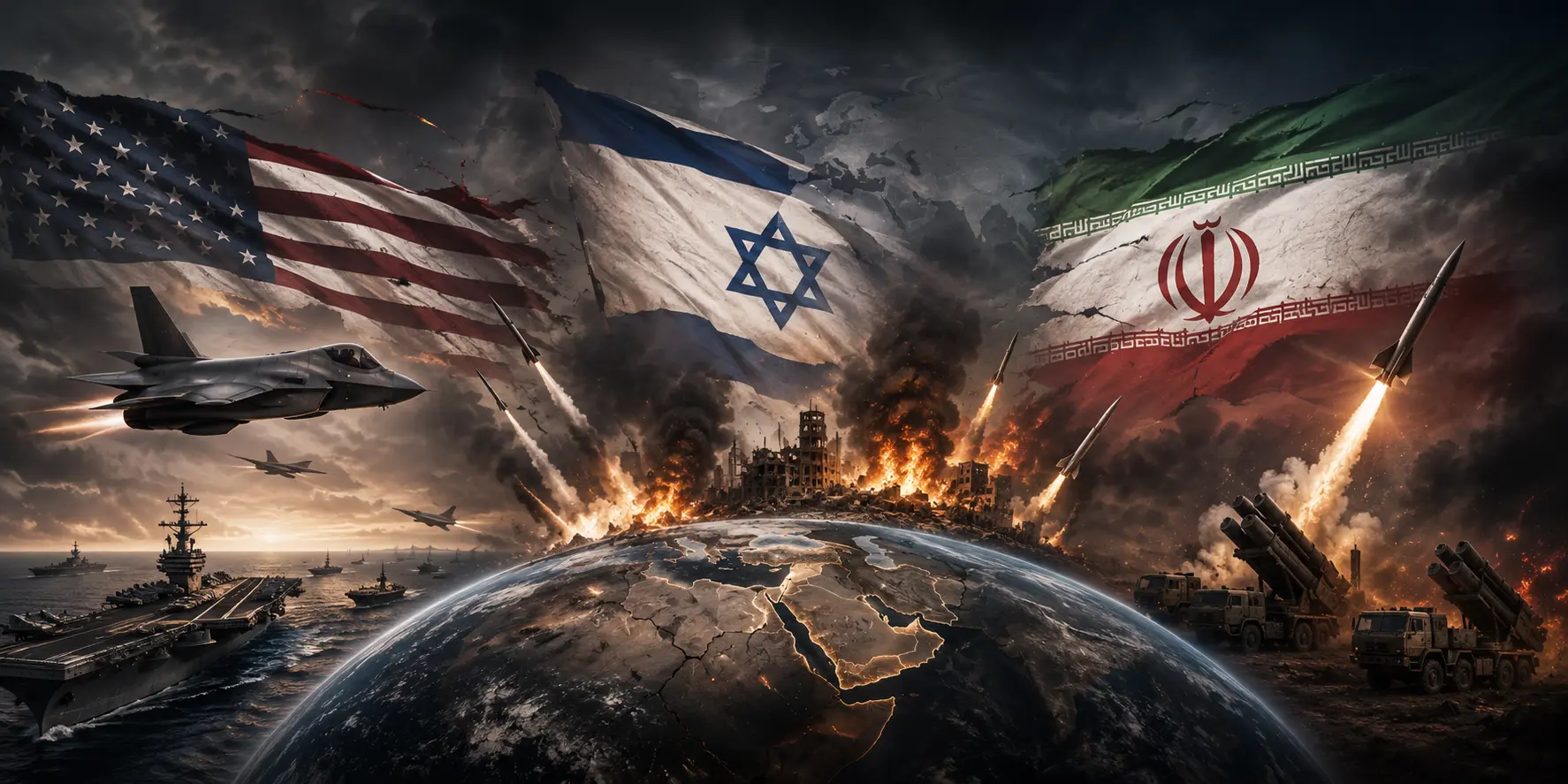
In February 2026, the United States assembled one of its largest naval armadas in the region to pressure Iran into abandoning its nuclear and ballistic missile programs. Iran, however, maintained that it had the sovereign right to pursue nuclear technology for peaceful purposes under international law and refused to comply with U.S. demands. Until 28 February 2026, the extensive U.S. military deployment was widely perceived as a coercive measure intended to compel Iran to negotiate rather than as a prelude to armed conflict. This perception changed when the United States and Israel launched coordinated military operations against Iran, marking the beginning of a full-scale war.

The United States and Israel launched a coordinated military attack on Iran on 28 February 2026, marking the formal outbreak of war. The conflict resulted in the deaths of Iran's Supreme Leader, Ayatollah Ali Khamenei, along with several senior military commanders and civilian officials. Iran retaliated with missile and drone strikes targeting U.S. and Israeli military and strategic assets, causing significant damage and loss of both military personnel and civilians.
The exchange of hostilities severely disrupted commercial shipping through the Strait of Hormuz, one of the world's most critical maritime trade routes. The resulting interruption to global energy supplies triggered a sharp increase in international oil prices and heightened economic uncertainty worldwide.

After five weeks of intense fighting, the United States and Iran agreed for ceasefire on 8 April 2026, following sustained diplomatic efforts led by the Gulf countries and Pakistan. On this breakthrough, a Memorandum of Peace, titled as “Islamabad Memorandum”, was signed remotely on 17 June 2026 by the Presidents of the United States and Iran, with the Prime Minister of Pakistan serving as a witness and counter signatory.
The agreement marked a significant step toward restoring regional stability. Following the peace accord, maritime traffic through the Strait of Hormuz resumed normal operations, easing concerns over global energy security. As a result, international oil markets stabilized, and crude oil prices gradually returned to pre-conflict levels, reducing pressure on the global economy and restoring confidence in international trade and energy supplies.
However, in July 2026, repeated ceasefire violations by both sides renewed fears of a wider regional conflict. Iran closed the Strait of Hormuz for commercial shipping and sought to maintain control over this strategically vital maritime route. In response, the United States imposed additional sanctions on Iran's oil exports and launched strikes against Iranian oil infrastructure and military installations.
The renewed escalation has disrupted global energy markets, triggering a sharp increase in oil and fuel prices. If the crisis persists, the resulting rise in energy and transportation costs is likely to exert significant pressure on the global economy, with developing and third-world countries expected to bear the heaviest burden. Higher fuel prices will not only increase inflation but also adversely affect trade, industrial production, and food security, thereby exacerbating existing economic challenges in many vulnerable states.
The second phase of the escalation has heightened concerns that the conflict could expand into a full-scale regional war. The signing of the Strategic Mutual Defense Agreement (SMDA) between Saudi Arabia and Pakistan on 17 September 2025 has further underscored the strategic importance of regional security. In accordance with the agreement, Pakistan has reportedly deployed troops and military assets to Saudi Arabia to strengthen its defensive posture.
Meanwhile, the United States has launched military strikes against targets in Iran as well as Houthi positions in Yemen. In response, Iran has targeted several U.S. military bases located in Saudi Arabia, Kuwait, Qatar, and the United Arab Emirates. Despite these attacks, the Gulf states have refrained themselves from direct military confrontation with Iran, reflecting their desire to prevent the conflict from escalating into a wider regional war.
It is noteworthy that several Gulf and European countries expressed reservations about the military strikes and have emphasized the importance of diplomacy and de-escalation. Consequently, these countries are likely to avoid direct participation in any broader U.S.-led military campaign, preferring instead to support efforts aimed at containing the conflict and facilitating a negotiated resolution.
The U.S. President has praised the U.S. military's actions against Iran while simultaneously emphasizing the need for negotiations to achieve lasting peace. Similarly, Iran has welcomed the ceasefire and expressed its willingness to engage in negotiations, provided that the terms are fair and acceptable. The United States also has compelling reasons to pursue peace, as growing domestic pressure reflects increasing public opposition to prolonged military engagement. At the same time, Iran's economy can no longer sustain the heavy burden of sanctions and international isolation.
It is evident that both countries have strong incentives to pursue a peaceful resolution. Iran seeks the lifting of economic sanctions to improve the living standards of its people, while the United States aims for a rollback of Iran's nuclear and missile programs so that its military campaign can be regarded as having achieved its strategic objectives.
Although the path to peace may be challenging, it remains attainable. What is needed now is patience, mutual trust, and a clearly defined roadmap for negotiations that addresses the legitimate concerns of both sides. As the world's leading power, the United States could take the initiative by fostering an environment conducive to constructive dialogue, enabling Iran to engage in negotiations without compromising its dignity. Likewise, Iran should demonstrate flexibility and a willingness to make reasonable compromises in the broader interest of regional peace and stability.
Regional stakeholders, particularly the Gulf countries and Pakistan, can also play a constructive diplomatic role by encouraging dialogue, facilitating confidence-building measures, and helping both parties to avoid further escalation. Their balanced engagement could once again contribute to reducing tensions and advancing a sustainable peace process.
It is evident that continued conflict serves the interests of no nation. The Gulf states, in particular, stand to bear the greatest economic and security consequences of any further escalation. Consequently, they are well positioned to play a pivotal role in promoting dialogue and supporting peace efforts, just as they contributed to de-escalation during the initial phase of the conflict. Lasting peace will require political will, mutual respect, and a commitment from all stakeholders to prioritize diplomacy over confrontation.